HomeAbout Us ProductsApplications QualityResources BlogContact Request Quote →

Critical Applications Demand Critical Quality

From Brake Systems to Diamond Tools — Where Performance Matters

Select an Application to Explore

We're open to serve any industry needing electrolytic copper powder. Our technical team can support applications across automotive, aerospace, electronics, construction, chemical processing, and emerging technologies.

Friction Materials Industry

Friction materials convert kinetic energy to thermal energy through controlled friction. Copper powder plays multiple critical roles in both organic (resin-bonded) and metallic (sintered) friction materials.
Thermal Management
Copper's 401 W/m·K conductivity rapidly dissipates heat, preventing thermal fading and maintaining consistent braking performance up to 600°C peak.
Friction Film Formation
Forms compact tribolayer on pad surface, providing stable friction coefficient (μ = 0.35–0.45) and reduced wear rate of both pad and rotor.
Structural Reinforcement
Dendritic particles provide mechanical interlocking, high green strength in resin-bonded pads, and enhanced integrity in sintered brake pads.
Noise Dampening
Copper's ductility absorbs vibrations, reducing brake squeal and judder — critical for passenger comfort in automotive applications.
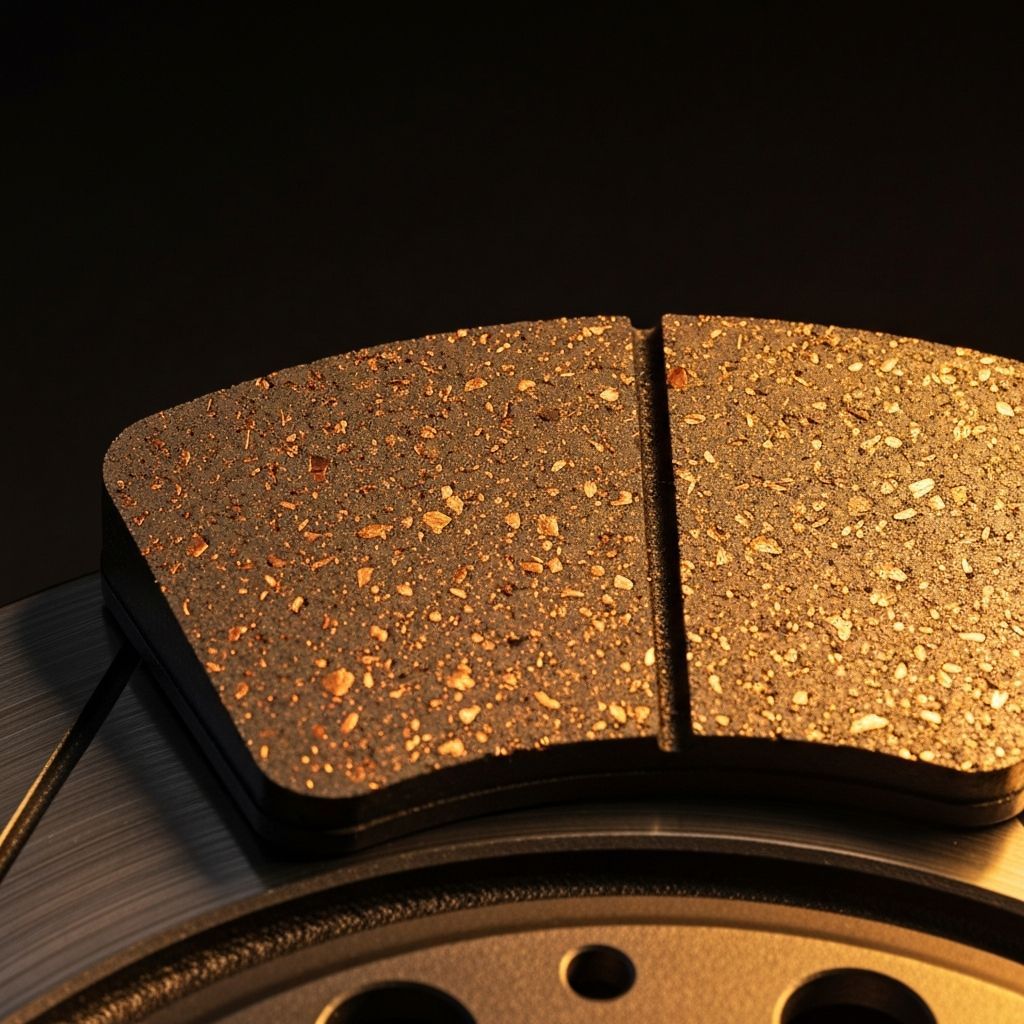
Friction Materials – Automotive Brake Pads

Products in This Sector

  • Automotive disc brake pads (passenger & light truck)
  • Heavy truck & performance/racing brake pads
  • Railway brake pads (composite & sintered metal)
  • Automotive clutch plates & industrial clutch facings
  • Wind turbine & elevator brake systems

Recommended Grades

ApplicationRecommended GradesReason
Automotive brake padsA123, A128, A135Good balance of properties
Heavy-duty truck padsA135, A200Higher density, better flow
Railway brake pads (PM)A200, A210Maximum density, flowability
Clutch platesA123, A128Good compressibility
High-performance racingA118, A123Maximum surface area for heat

Typical Formulation: Automotive brake pads: 5–15% copper, 15–25% phenolic resin binder, friction modifiers. Hot pressing at 150–180°C, 20–35 MPa.

Powder Metallurgy Industry

Powder metallurgy manufactures precision parts by compacting metal powders and sintering them. Copper powder serves both as primary material (bronze parts) and as alloying element (iron-copper parts).
Bronze Bearing Production
90% Cu + 10% Sn formulation creates self-lubricating bearings. Dendritic morphology ensures uniform tin distribution and good particle bonding.
Iron-Copper Alloy Parts
0.5–10% copper addition enhances sintering kinetics via liquid phase sintering, improves mechanical properties, and reduces dimensional change.
Electrical Contacts
Ag-Cu and Cu-W composites for high conductivity combined with wear resistance. Dendritic morphology provides excellent green strength for thin contacts.
Filters & Porous Components
Controlled porosity through particle size selection for filtration, flame arrestors, sound dampening, and breathable components.
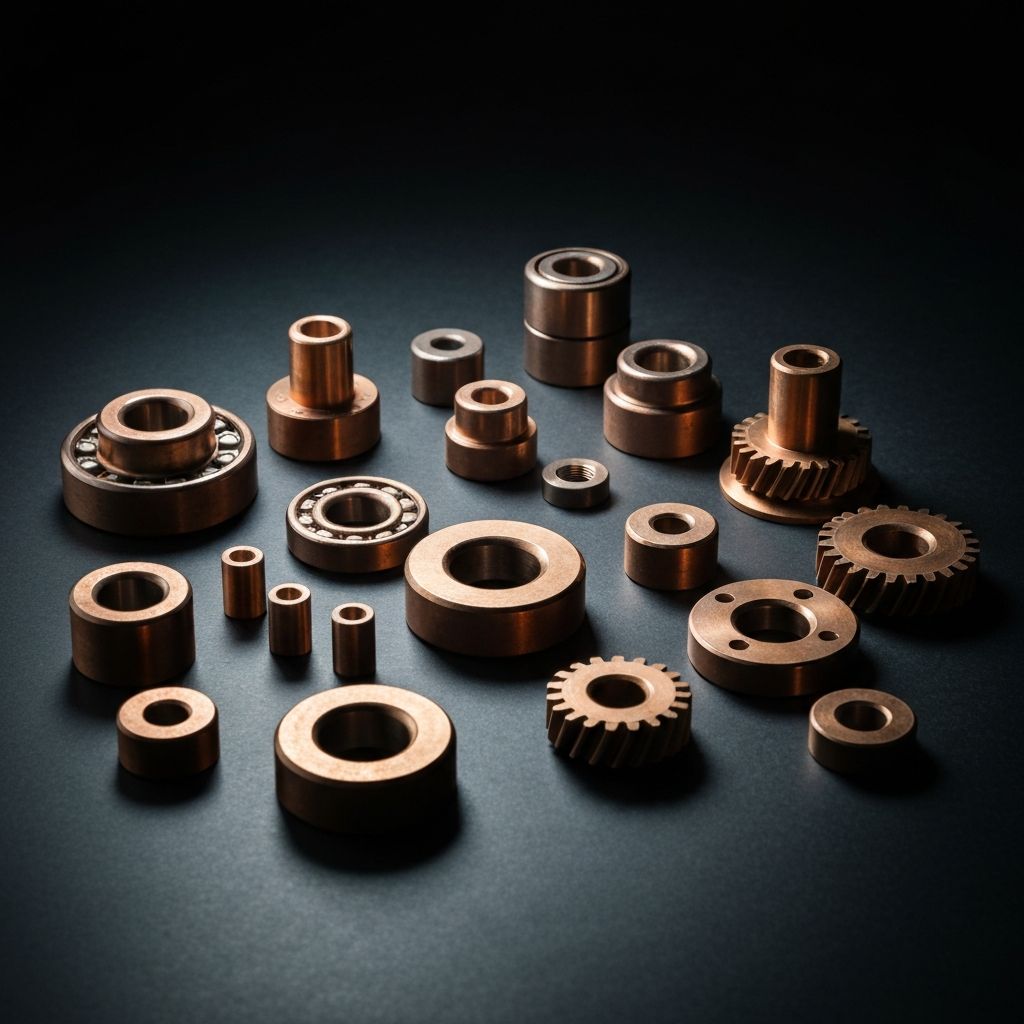
Powder Metallurgy Parts – Bronze Bearings

Recommended Grades

ApplicationRecommended GradesReason
Bronze bearingsA128, A135, A200Good mixing, sintering
Iron-copper partsA135, A200Free-flowing for automation
Electrical contactsA118, A123High purity, fine particle
FiltersA128, A135Controlled particle size
High-volume productionA200, A210Maximum flowability

Sintering Conditions: Copper-rich alloys: 850–950°C | Copper-iron: 1100–1150°C | Bronze (Cu-Sn): 800–850°C. Reducing atmosphere essential (H₂ or N₂-H₂ blend).

Diamond Tool Manufacturing

Diamond tools use industrial diamonds held in a metal matrix (bond). Copper is a key matrix component due to thermal conductivity, toughness, and appropriate sintering characteristics.
Matrix Formation
Primary binder holding diamond particles. Lower sintering temperature (700–900°C) than iron or cobalt. Forms strong mechanical grip on diamond crystals.
Thermal Conductivity
401 W/m·K conductivity prevents diamond graphitization during cutting/grinding, significantly extending tool life in high-speed operations.
Toughness Balance
Prevents premature diamond pull-out. Matrix wears at controlled rate, creating self-sharpening behavior — new diamonds continuously exposed.
Alloyability
Easily alloyed with Sn, Zn, Fe, Co, Ti to modify matrix hardness, wear rate, and toughness for specific cutting applications.
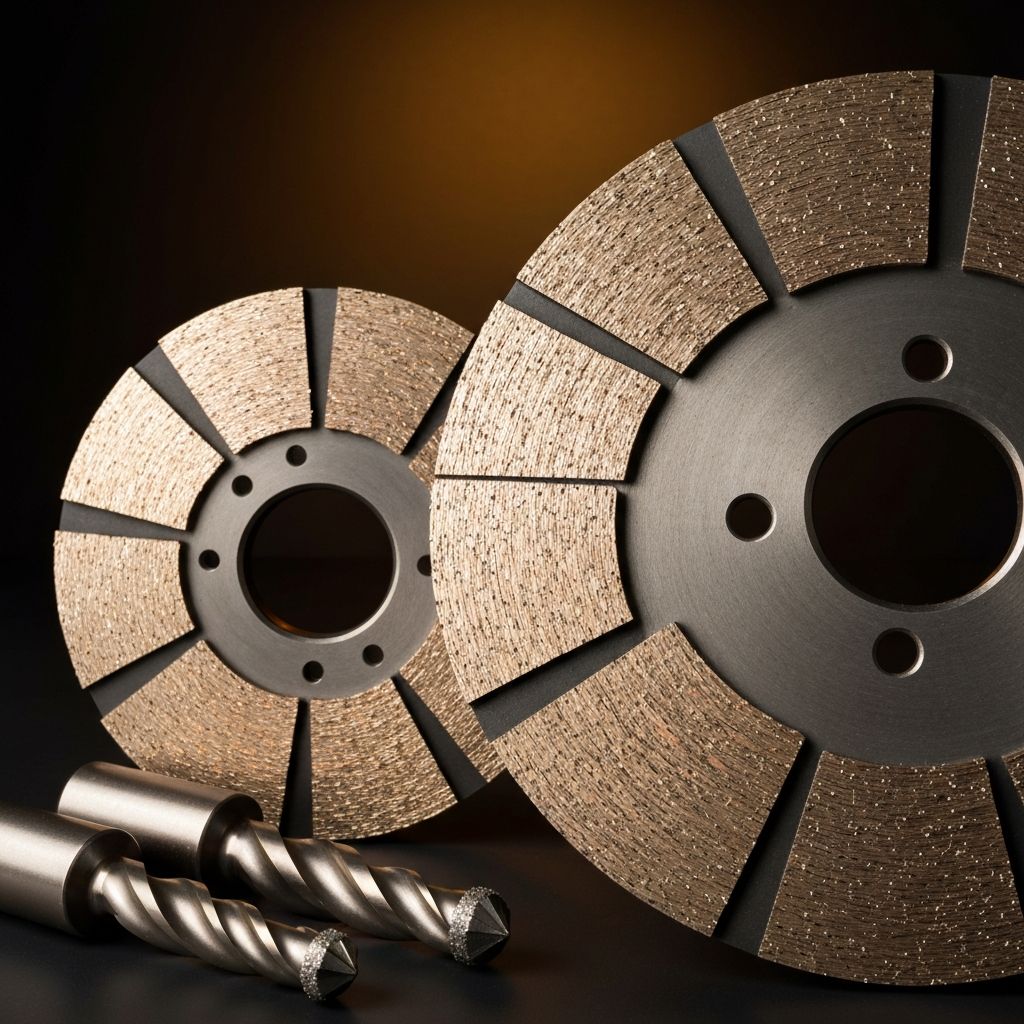
Diamond Tool Manufacturing

Grade Selection by Diamond Size

Diamond Grit SizeRecommended GradeReason
400–800 mesh (fine)A118, A123Fine matrix matches diamond size
60–200 mesh (medium)A128, A135General-purpose applications
20–50 mesh (coarse)A135, A200Coarse diamonds for construction

Recommended Grades by Application

ApplicationGrades
Stone cutting (marble, granite)A128, A135
Concrete cuttingA135, A200
Precision tools (glass, ceramics)A118, A123
High-volume productionA200

Hot Pressing Parameters: Temperature: 700–900°C | Pressure: 25–35 MPa | Time: 2–5 min | Atmosphere: Vacuum or N₂/Ar protective gas.

Welding & Brazing Industry

Copper powder is used in brazing alloys, welding consumables, and thermal joining applications, particularly in HVAC, refrigeration, and plumbing systems.

Copper-Phosphorus Brazing
Cu + 5–9% phosphorus creates self-fluxing alloy for copper-to-copper joints. No additional flux needed. Brazing temperature: 700–800°C.
Silver-Copper-Phosphorus Alloys
Ag-Cu-P systems with lower melting point for refrigeration and air conditioning. Stronger joints with good flow characteristics.
Flux-Cored Welding Wire
Copper powder in wire core provides conductivity and corrosion resistance for specific automated welding operations.

Recommended Grades

ApplicationGradesReason
Brazing pastesA128, A135Good mixing, flow
Self-fluxing alloysA135, A200Uniform particle size
Welding rod coresA128, A200Processing ease
Thermal sprayA200, A210Spheroidization behavior
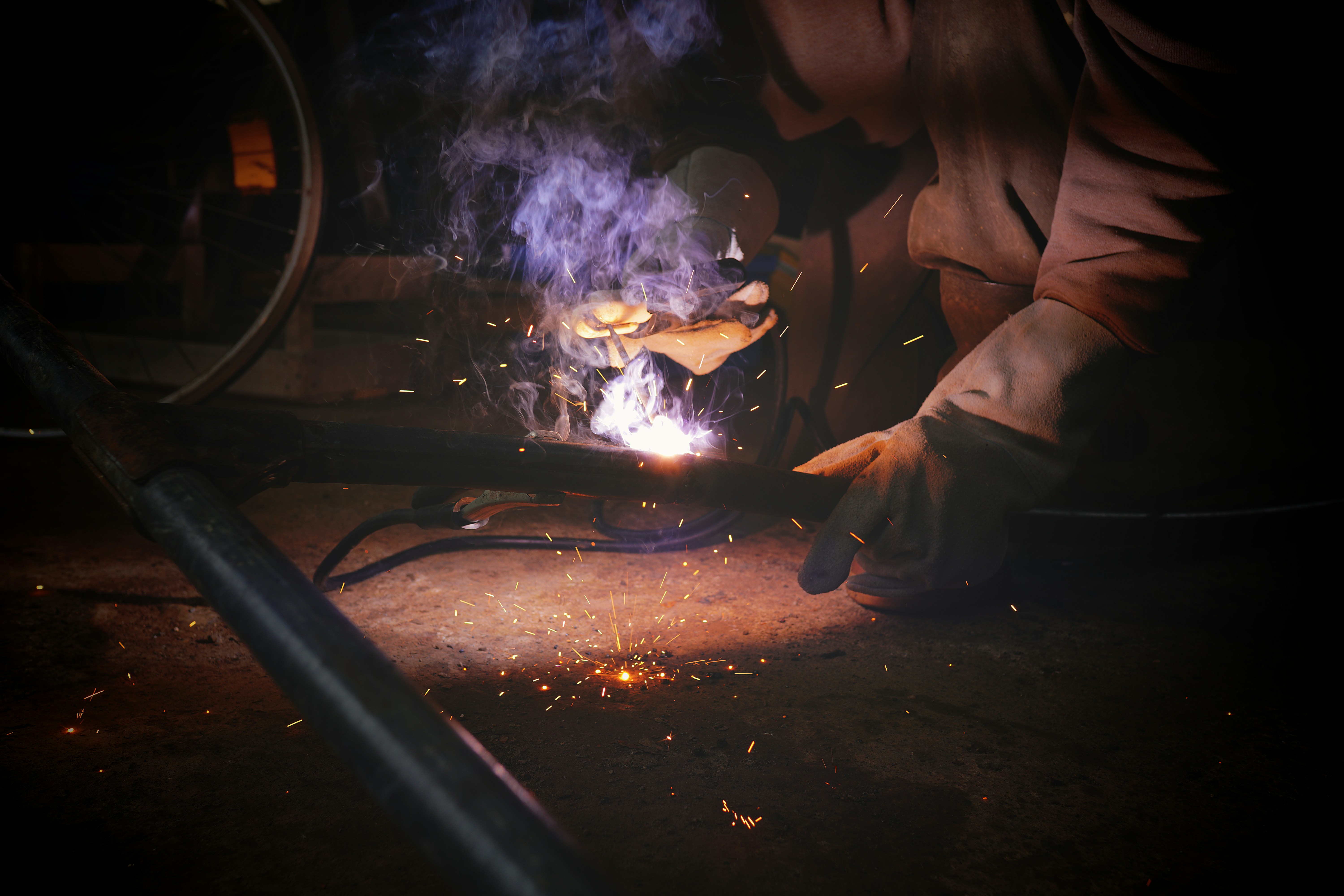
Welding and brazing operation

Products in This Sector

  • Copper-phosphorus brazing pastes
  • Silver-copper-phosphorus alloys
  • Self-fluxing brazing compounds
  • Flux-cored welding wires
  • HVAC system joining materials
  • Refrigeration tubing connections
  • Heat exchanger manufacturing

Brazing Paste Formulation: Copper powder: 80–90% | Phosphorus compounds: 5–10% | Binder/carrier: 5–10%. Application by brush, syringe, or screen printing. Heat to 700–800°C.

Electrical & Electronics Industry

Copper powder is used in conductive inks, pastes, adhesives, and sintered electrical components where high electrical conductivity is essential.

Conductive Inks & Pastes
99.80% Cu purity ensures maximum conductivity for PCB inks, flexible circuits, RFID antennas, and touch screen conductors.
Solar Cell Metallization
Front contact grid metallization and busbar formation. Cost-effective alternative to silver for photovoltaic applications.
EMI/RFI Shielding
Sintered copper components for electromagnetic interference shielding in electronic enclosures and devices.

Recommended Grades

ApplicationGradesReason
Conductive inksA118, A123Maximum surface area, fine particles
Printed electronicsA118, A123Smooth printing, good sintering
Die attachA123, A128Balance of properties
EMI shieldingA128, A135Cost-effective
Sintered contactsA123, A128High purity, good conductivity
Electronics circuit manufacturing

Products in This Sector

  • Printed circuit board (PCB) conductive inks
  • Flexible circuit inks & RFID antenna inks
  • Touch screen conductors
  • Conductive adhesives & die attach materials
  • Solar cell metallization pastes
  • EMI/RFI shielding components

Conductive Ink Formulation: Copper powder (A118/A123): 75–85% | Organic binder: 5–10% | Solvent: 10–15% | Additives: 1–5%. Sintering at 250–400°C in reducing atmosphere.

Chemical & Catalytic Applications

Copper powder serves as catalyst, reagent, or reducing agent in various chemical processes and research applications, where high surface area and purity are critical.

Hydrogenation Catalysts
Dendritic morphology maximizes reactive surface area for reduction of nitro compounds, alkyne hydrogenation, and selective hydrogenation processes.
Ullmann Coupling
C-C bond formation and aryl halide coupling for organic synthesis building blocks. High purity prevents catalyst poisoning.
Click Chemistry
Azide-alkyne cycloaddition for bioconjugation reactions and pharmaceutical research. Batch-to-batch reproducibility ensures consistent results.

Recommended Grades

ApplicationGradesReason
CatalysisA118, A123Maximum surface area
Organic synthesisA118, A123High purity, fine particles
ResearchA118, A123, A128Flexibility in particle size
Large-scale processesA128, A135Cost-effective, good properties
Chemical lab glassware and catalyst research

Why Electrolytic Copper for Chemistry?

  • High Specific Surface Area: Dendritic morphology maximizes reactive surface — higher catalytic activity per gram
  • High Purity (99.80%): Minimal impurities prevent catalyst poisoning and ensure consistent performance
  • Controlled Particle Size: Grade selection optimizes reaction kinetics and enables easy separation/recovery
  • Reactive Surface: Freshly reduced surface highly reactive for electron transfer reactions
  • Batch Reproducibility: Statistical process control ensures consistent catalytic performance

Research Note: Our A118 and A123 grades are particularly suited for research applications where maximum surface area and highest purity are required for reproducible results.

Carbon Brushes & Electrical Contacts

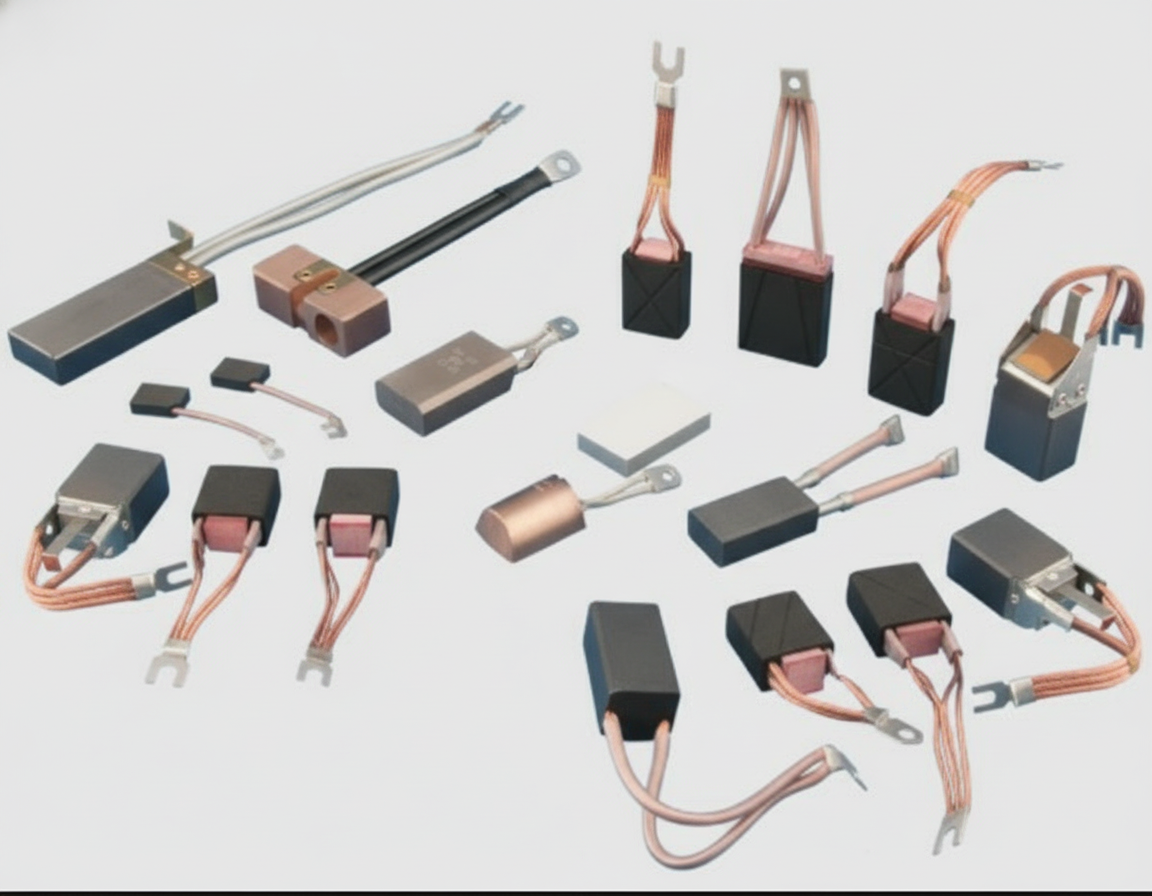
Carbon brushes are sliding electrical contacts used in motors, generators, alternators, and slip ring assemblies. Electrolytic copper powder is a critical ingredient in carbon brush formulations, significantly improving electrical conductivity, thermal management, and service life.
Enhanced Electrical Conductivity
Copper's electrical conductivity (5.96 × 10⁷ S/m) is the highest of any common metal. Adding 10–40% electrolytic copper powder to carbon brush formulations dramatically reduces contact resistance and improves current transfer efficiency.
Thermal Management
Copper's 401 W/m·K thermal conductivity dissipates heat generated at the brush-commutator interface, preventing thermal runaway and extending brush life — especially critical in high-current applications.
Structural Binder & Matrix
Dendritic copper particles mechanically interlock with graphite/carbon particles during pressing, providing structural integrity and preventing brush crumbling under vibration and mechanical stress.
Controlled Wear Rate
Copper content is carefully balanced to achieve the desired wear rate — enough copper for conductivity and strength, while maintaining the self-lubricating properties of the carbon matrix for smooth commutator contact.
Electric motor and carbon brush assembly

Carbon Brush Types Using Copper Powder

  • Electrographitic brushes: 10–25% Cu — general purpose motors, traction motors
  • Metal-graphite brushes: 25–60% Cu — high-current, low-voltage applications
  • Copper-graphite brushes: 40–80% Cu — slip rings, low-voltage DC machines
  • Silver-graphite brushes: Cu as secondary addition — precision instruments

Applications by Industry

  • DC motors and generators (industrial, automotive)
  • Traction motors (railways, electric vehicles)
  • Wind turbine generators (slip ring assemblies)
  • Alternators and starter motors
  • Power tools (angle grinders, drills)
  • Household appliances (vacuum cleaners, mixers)
  • Aerospace and defense electrical systems

Recommended Grades

Brush TypeCu ContentRecommended GradeReason
Electrographitic10–25%A118, A123Fine particles, high surface area for bonding with graphite
Metal-graphite25–60%A123, A128Good compressibility, strong green compact
Copper-graphite40–80%A128, A135Balanced density and flowability for pressing
High-current slip rings60–80%A135, A200Free-flowing for automated production

Typical Processing: Mix copper powder with graphite/carbon black → Cold press at 100–300 MPa → Sinter at 700–900°C in reducing atmosphere → Machine to final dimensions. Copper content directly controls resistivity (typically 0.5–50 μΩ·m for metal-graphite grades).

Key Data: Metal-graphite brushes with 40–60% Cu achieve contact resistance of 0.1–1.0 mΩ/cm² and current density up to 15–20 A/cm² — significantly better than pure carbon grades.

Industries We Serve

Automotive Component Manufacturing

Brake system manufacturers, clutch manufacturers, PM part producers, Tier 1 & 2 suppliers

Railway & Transportation

Railway brake system suppliers, metro/subway equipment, heavy vehicle brake producers

Powder Metallurgy Parts

Bearing manufacturers, structural PM component producers, automotive PM parts suppliers

Diamond Tool Manufacturing

Stone cutting tool makers, construction tool producers, drilling tool manufacturers

Welding Consumables

Brazing alloy producers, welding wire manufacturers, HVAC/refrigeration suppliers

Electronics & PCB

Printed circuit board producers, conductive ink manufacturers, flexible electronics companies

Chemical & Pharmaceutical

Chemical synthesis companies, catalyst manufacturers, research institutions, fine chemical producers

Research & Development

Universities, research labs, materials science departments, government research facilities

Carbon Brush & Electrical Contact

Carbon brush manufacturers, motor & generator OEMs, traction motor suppliers, power tool manufacturers

Discuss Your Application

Our technical team can help you select the right grade and provide application-specific guidance for your process.